
Creating a Functional Kitchen Without a Dedicated Pantry
Eastern suburbs, Sydney
As part of a whole-home organisation project in Sydney’s Eastern Suburbs, we worked on a kitchen that had one particular challenge: there wasn’t really a dedicated pantry. The kitchen had a slim built-in cabinet that had been added to the wall, but it could only accommodate around half of the client’s pantry items. Everything else had to be worked into the existing kitchen cupboards, so the key was to make the entire kitchen function as one cohesive storage system.
Rather than simply trying to fit everything into the limited empty spaces, we looked at how the kitchen was actually being used and decided where each category would work best for our client. The priority was keeping frequently used items within easy reach of the main working area around the sink and stove, while less frequently used items could move into higher cupboards or onto the back of the island bench, closer to the living area.
Integrating a pantry system into the existing kitchen
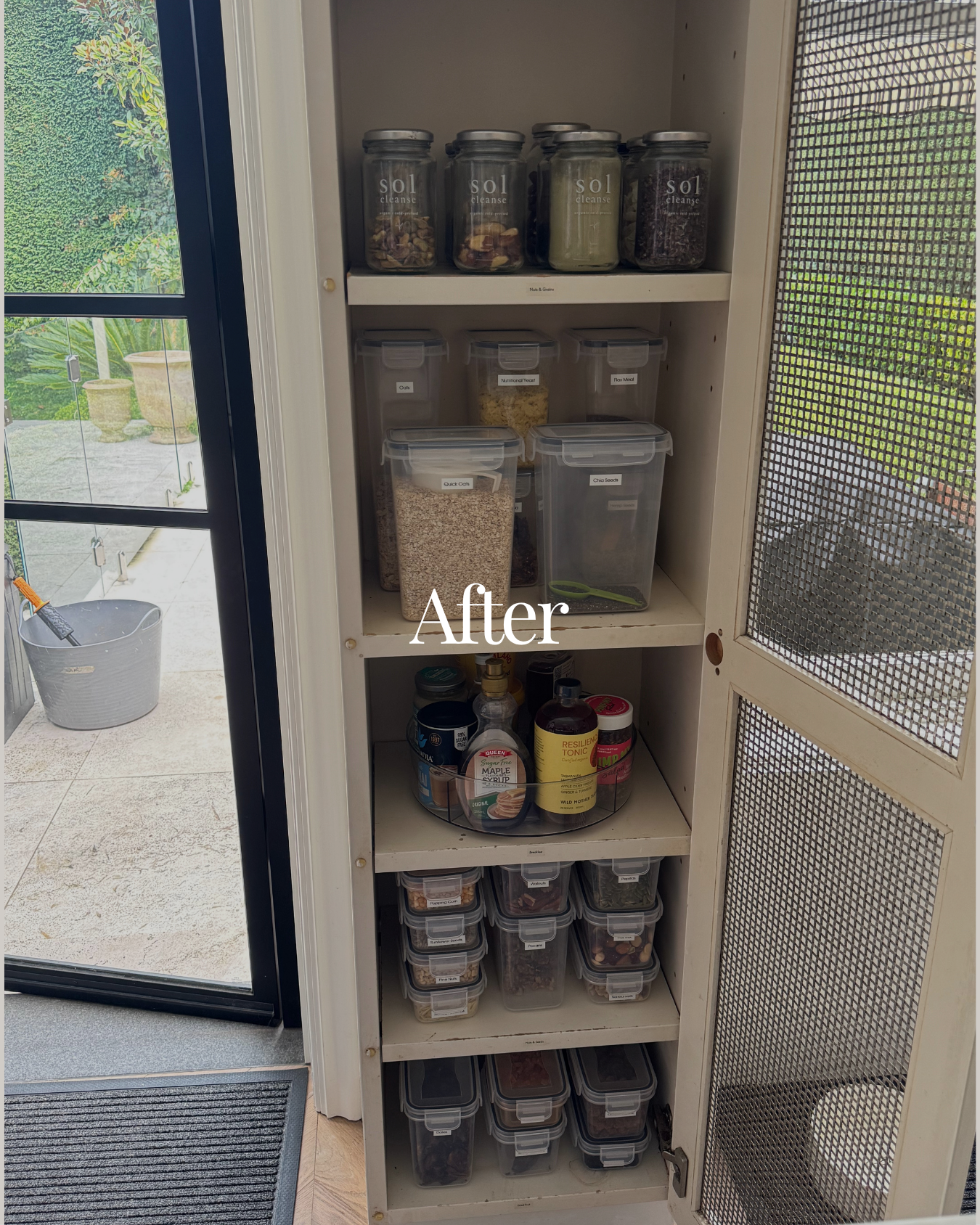
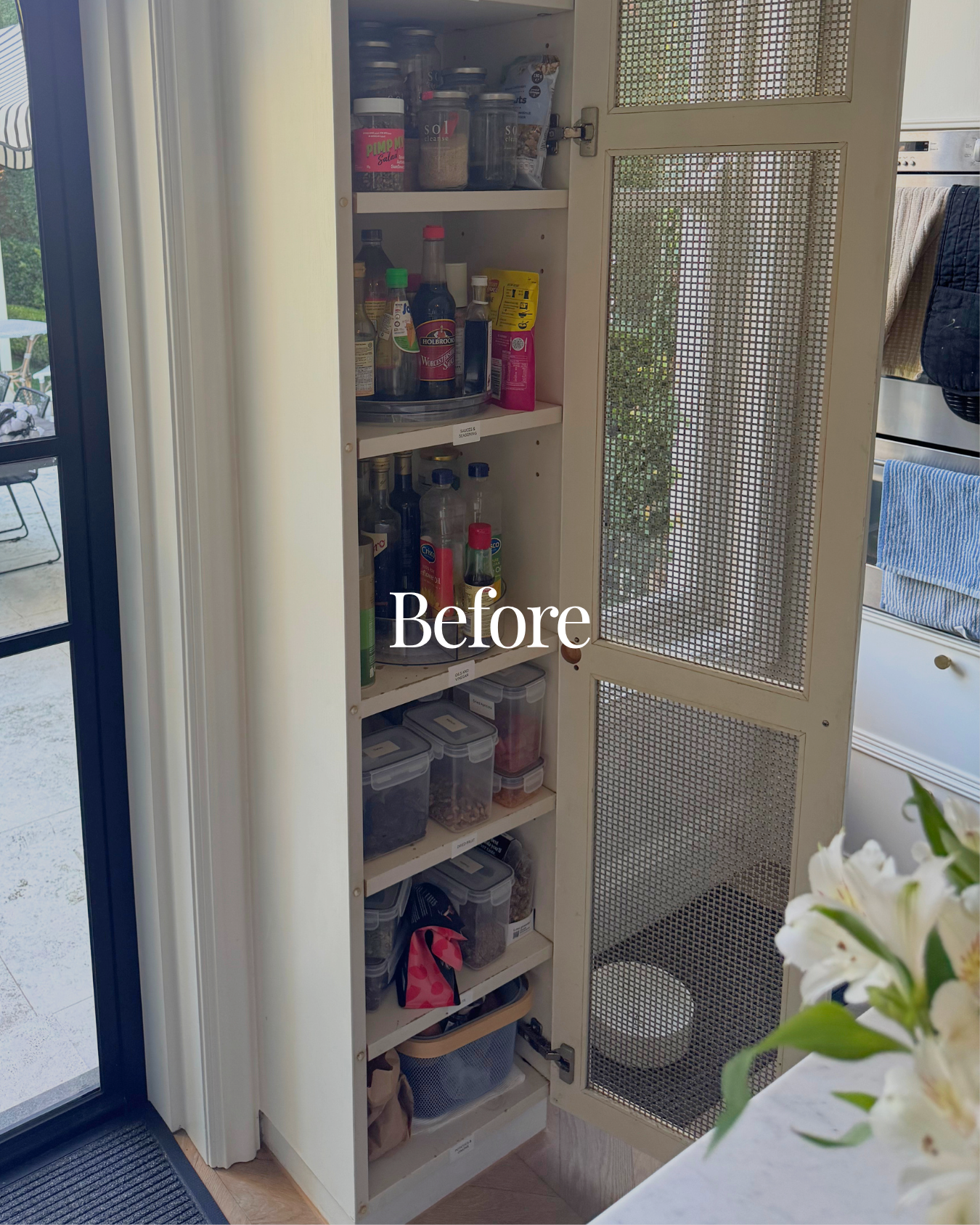
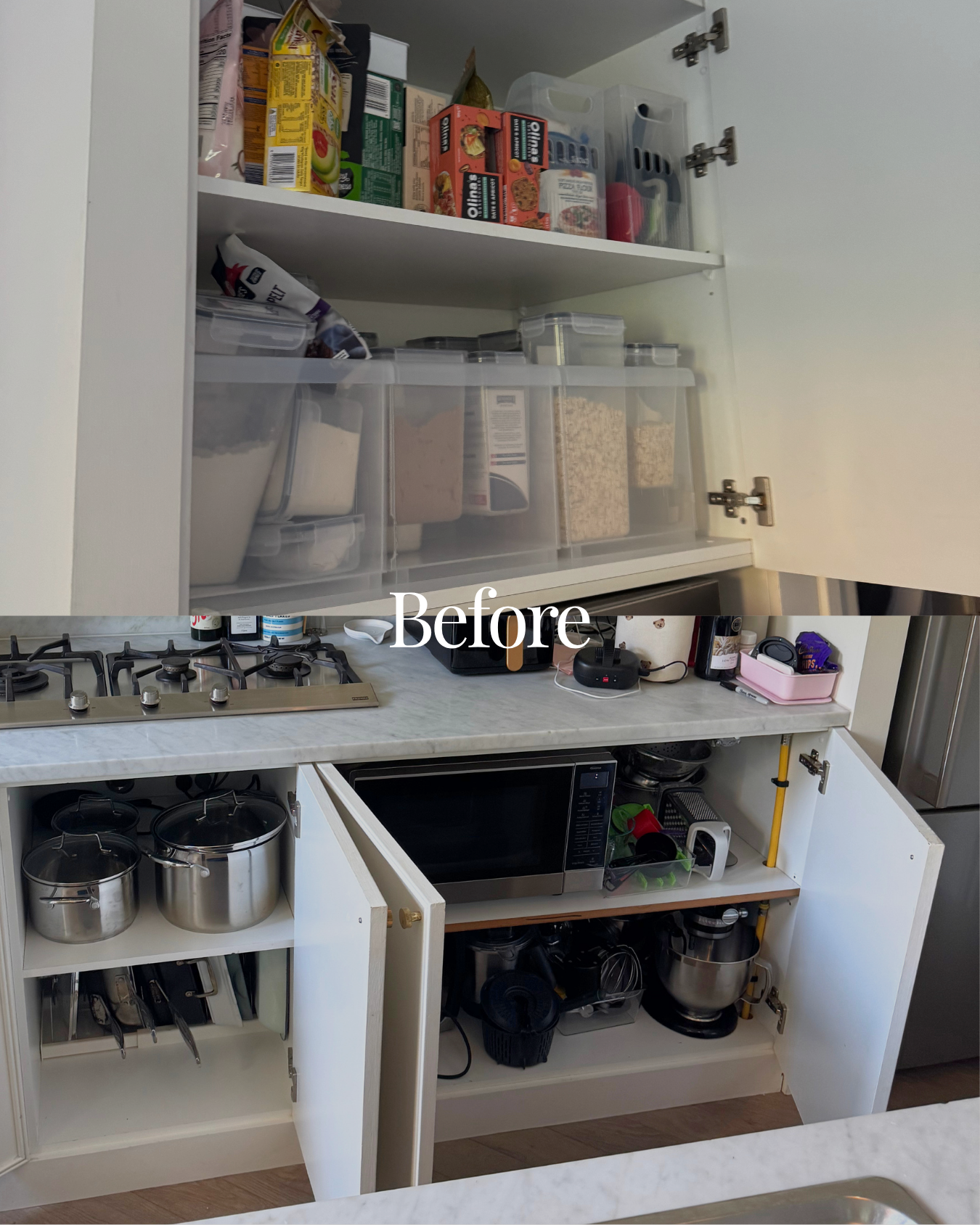
The existing pantry cabinet became the permanent home for breakfast items, nuts and grains, dried fruit, tea and coffee, with each category given its own shelf.
The client already had her pantry items decanted into plastic containers, so we kept these rather than introducing a whole new set of storage products. She is planning a kitchen renovation in around two years, so investing in new jars didn’t make sense to her at this stage.
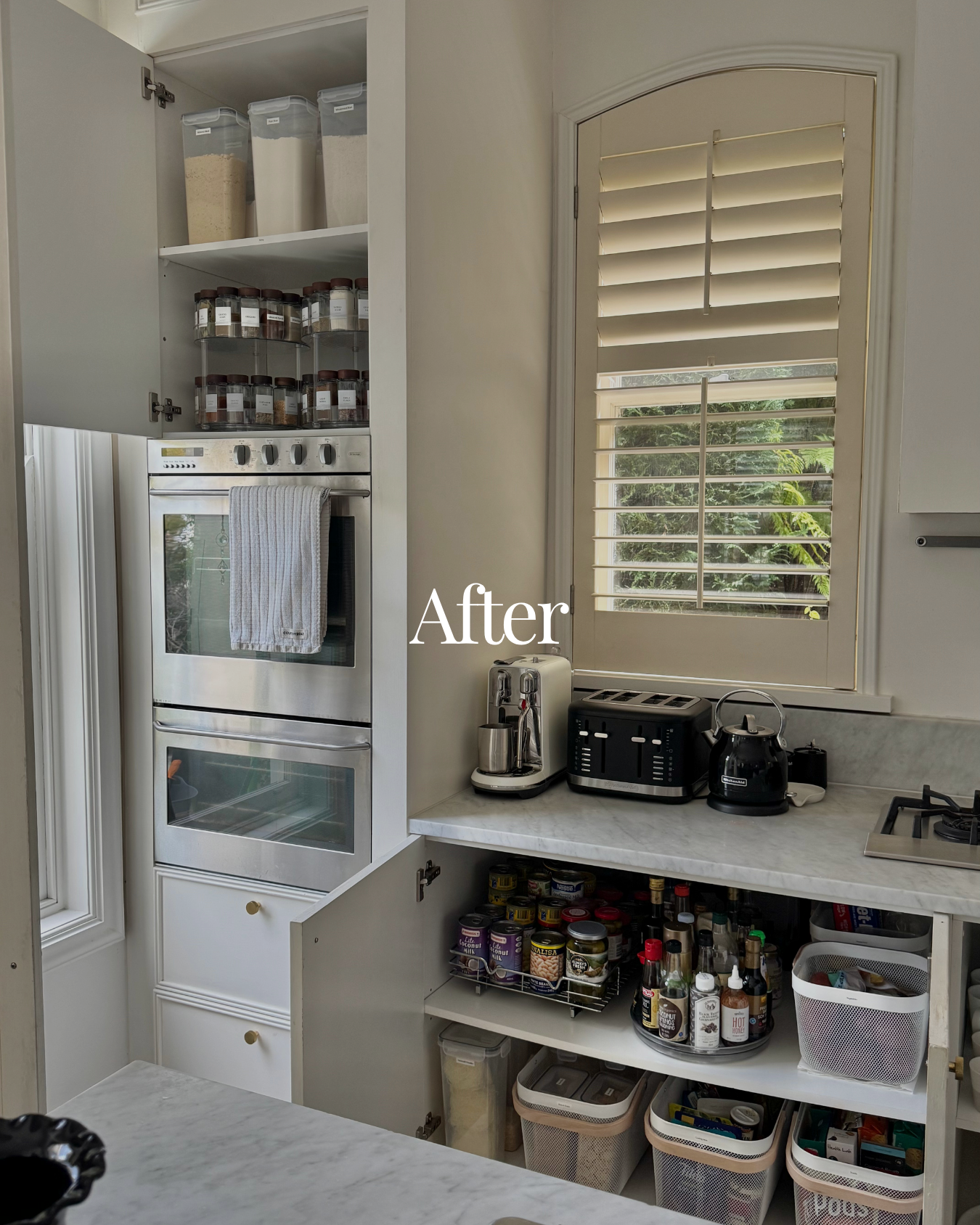
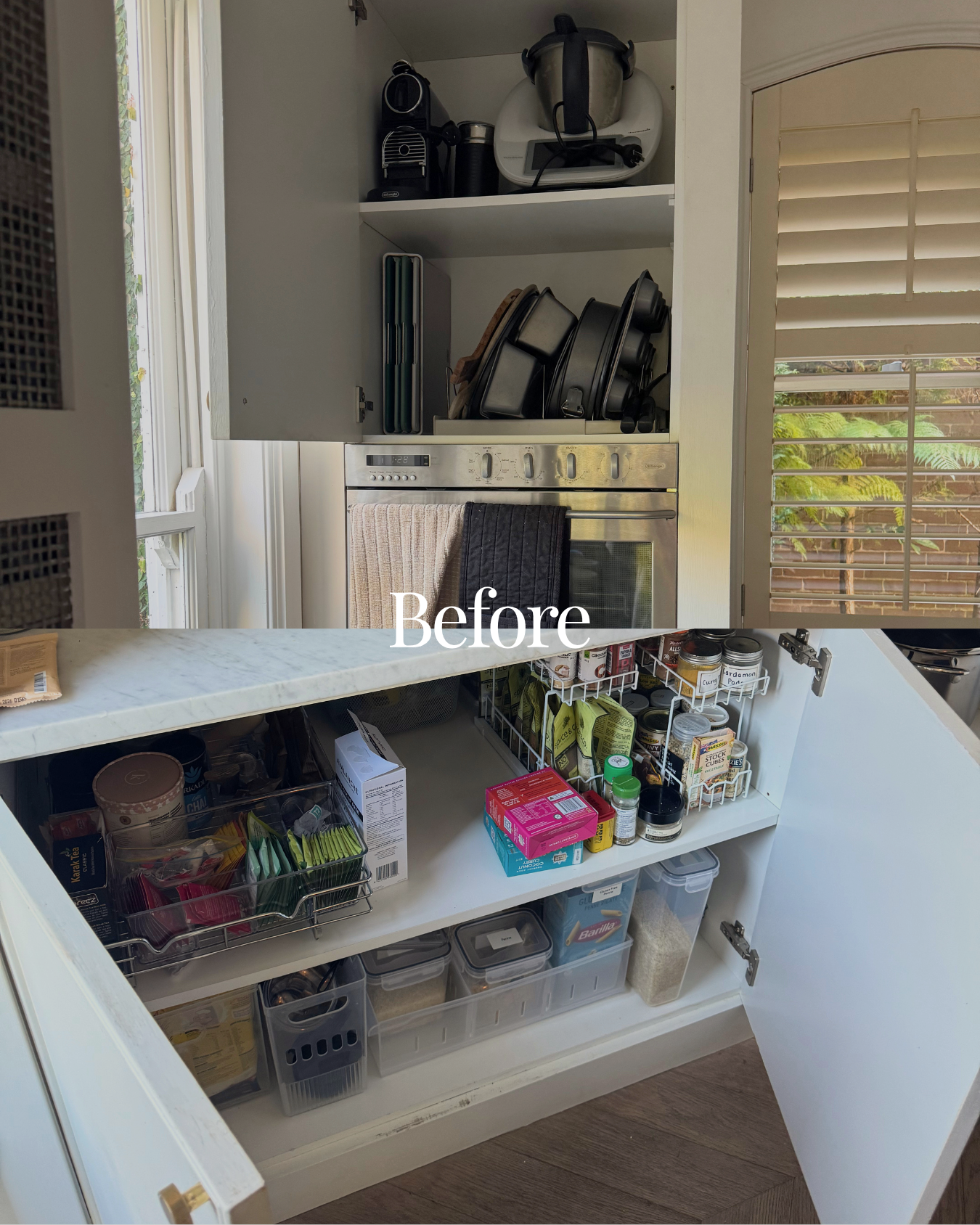
We then used the surrounding kitchen cupboards to house the rest of the pantry items. The deep cupboard underneath the stove had plenty of unused vertical and depth space, so we introduced deep baskets to categorise the contents while making everything easier to access. A spinner was added for sauces, allowing everything to be visible at once, while an existing pull-out wire frame was used for cans and jars.
The client also had one of the largest spice collections we’ve come across, with more than 40 different spices. We decanted these into small glass jars with acacia wood lids and labels, then arranged them on a double-tiered spice rack. The two racks fit neatly side by side, making the entire collection visible and accessible.
This is where small organisational products can make a big difference. Rather than simply adding more storage, we used products that made the existing cupboards easier to navigate and better suited to the items being stored.
Creating a flow that compliments routines
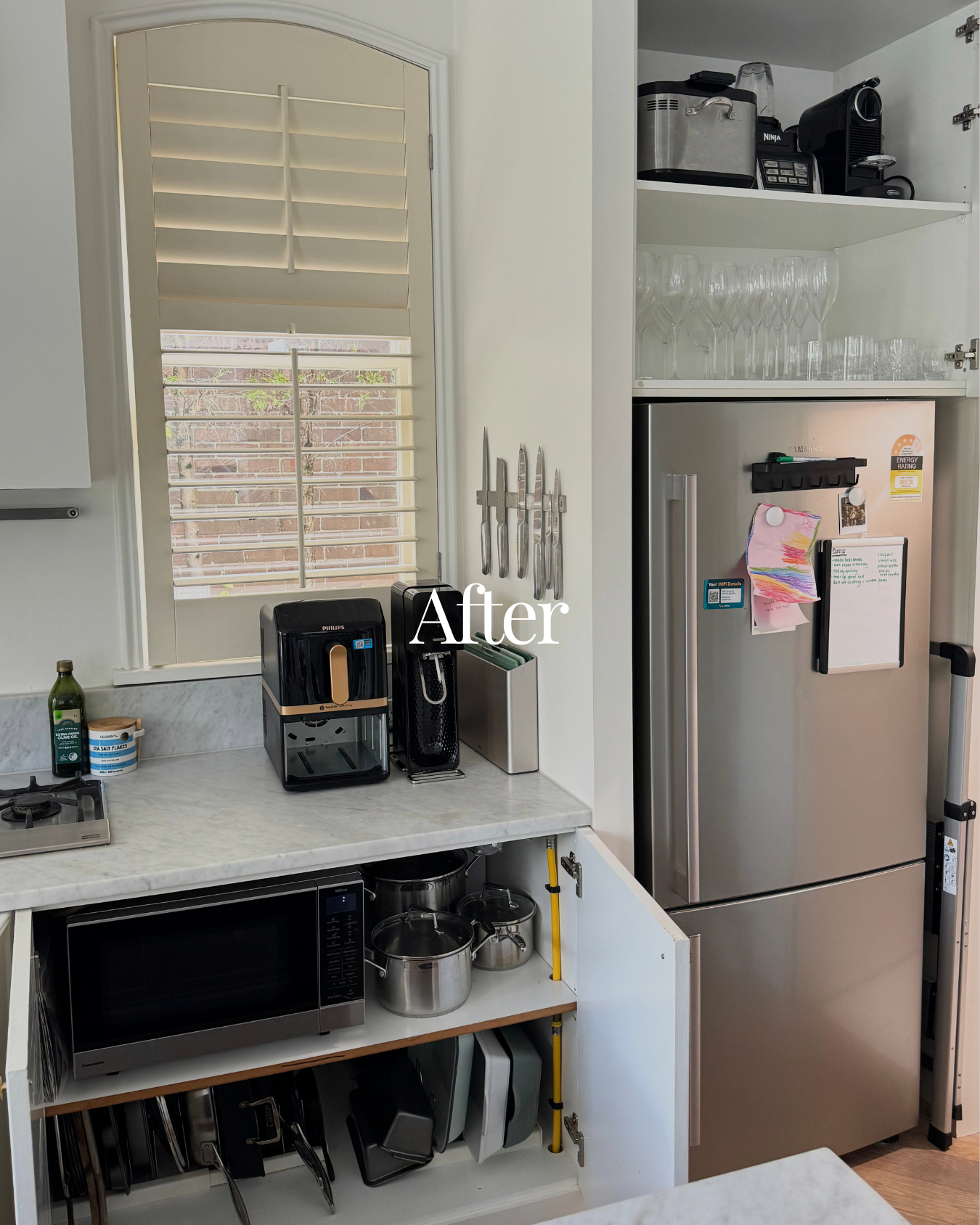
We also changed where the kitchen equipment lived. The cupboard underneath the stove had previously been used for pots and pans. We moved these into the next cupboard, which was larger and could accommodate pots, pans, baking trays and other larger cooking equipment together.
This created space underneath the stove for crockery and cups instead. It’s a much more practical location for unloading the dishwasher, and it also means plates and bowls are right beside the stove when food is being plated.
Above the spices, baking items were placed on the top shelf. As baking isn’t an everyday activity for this family, these items didn’t need to occupy prime, easy to access space. The shelf underneath was kept within arm’s reach for the spice collection.
Making the Kitchen Work for the Whole Household
We also moved the client’s glasses from the back of the island bench to the cupboard above the fridge. With a newborn in the household who will eventually be exploring cupboards, keeping glassware higher up made more sense. The space freed up on the back of the island also allowed us to spread the client’s container collection across six shelves instead of four, making the containers easier to access and put away.
Under the sink, we added a double-shelved rack designed to work around the plumbing, creating additional usable storage in an awkward space. The drawers were also cleaned and reset, without introducing unnecessary products or changes.
The finished kitchen was about making better decisions with the space that already existed. By giving every category a permanent home and placing high-priority items where they are easiest to reach, the kitchen now has a much clearer flow for cooking, unpacking the dishwasher and putting things away.
For this project, the biggest improvement came from being strategic about where things lived, not simply adding more storage!
Shannon Willis
Founder + Senior Organiser
Want to bring the best out in your space? Get in touch via this form.
